
Your business may offer an excellent product or service, but potential customers often encounter your brand before they experience your work. They might discover you through your website, a social media post, your packaging, or a business card.
Those first interactions help shape their expectations. Does your business look organised? Is it clear what you offer? Does your presentation feel relevant to them?
A professional logo and identity design studio helps you answer these questions through thoughtful design. The work goes beyond creating an attractive symbol: it gives your business a visual language that communicates who you are and works consistently wherever customers find you.
1. Design Starts With Understanding Your Business
A useful brand identity begins with a clear understanding of the business behind it.
Before developing concepts, a professional studio should explore your services, audience, positioning, and ambitions. This discovery process gives the design a purpose and provides a practical basis for evaluating ideas.
Questions might include:
- Who are your ideal customers?
- What problems do you solve for them?
- What makes your approach different?
- What should people associate with your business?
- Where will the identity be used most often?
With these answers in place, design decisions can reflect your business goals instead of relying only on personal taste.
2. You Get an Identity That Extends Beyond the Logo
A logo is an important part of your brand, but it cannot do every job on its own.
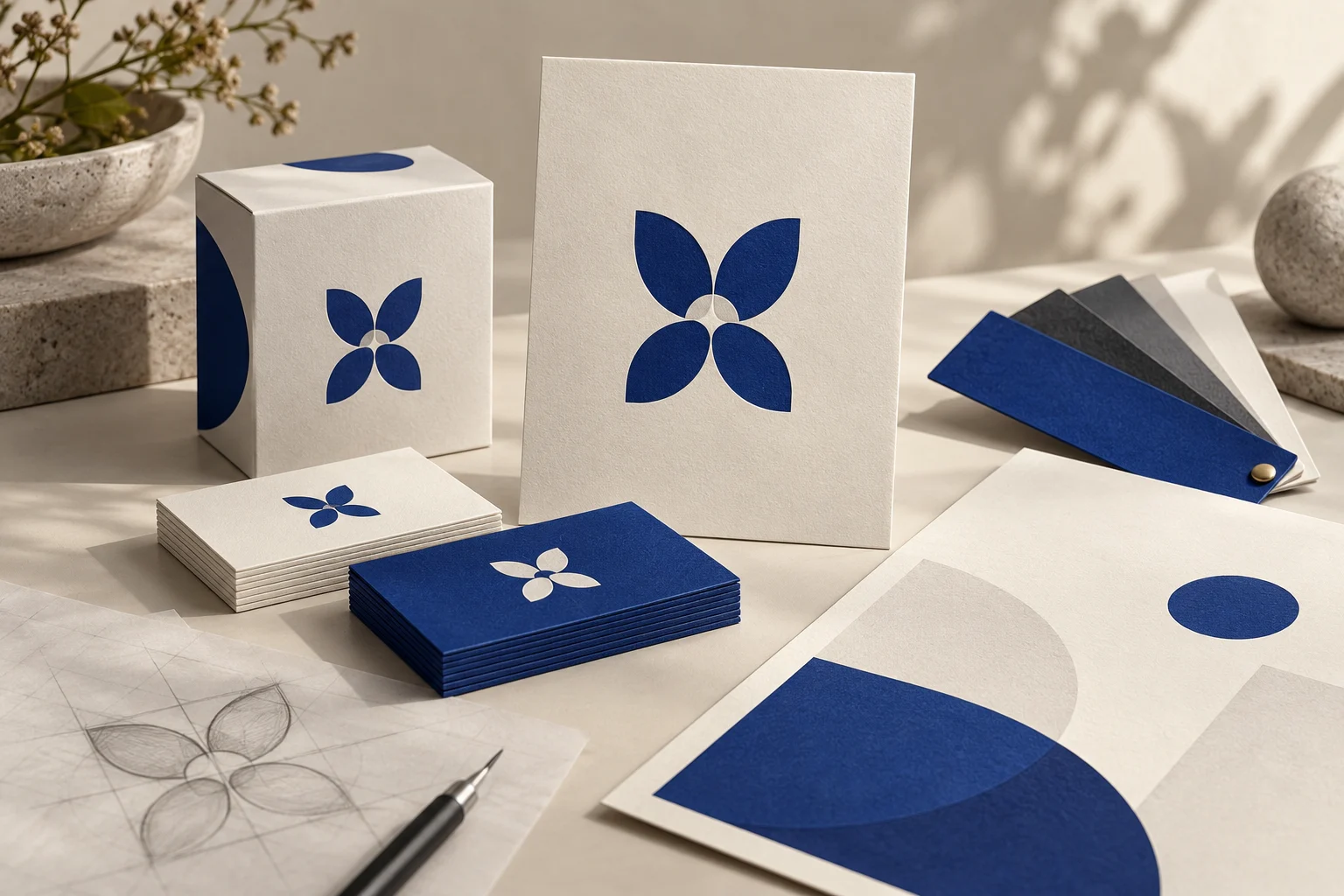
Your website, brochures, packaging, presentations, and social media graphics also need a consistent approach to colour, typography, imagery, and layout. Without that system, each new piece of communication can look like it belongs to a different business.
Depending on the agreed scope, an identity project may include:
- A primary logo and alternative layouts.
- A defined colour palette.
- Typography and guidance on its use.
- Supporting graphic elements.
- A photography or illustration direction.
- Examples of the identity across relevant materials.
- Brand guidelines for future use.
Together, these elements help your business present a recognisable identity across different formats.
3. Your Brand Can Communicate a More Distinctive Position
Many businesses in the same industry use similar symbols, colours, and visual styles. Following those conventions too closely can make it difficult for customers to tell them apart.
A professional studio can review your competitive landscape and identify opportunities for a more distinctive direction. The aim is to make your identity relevant to your audience while giving it qualities people can associate with your business.
That difference might come through custom lettering, an expressive colour combination, a memorable symbol, or a particular approach to imagery.
Distinctiveness should have a reason behind it. A design needs to communicate the right character as well as attract attention.
4. The Design Is Developed for Real Applications
A logo that looks impressive on a presentation slide may struggle on a small mobile screen, a printed label, or an embroidered uniform.
Professional identity work considers these practical requirements during development. Relevant checks can include readability at small sizes, performance in a single colour, and visibility on light and dark backgrounds.
Your studio should also prepare suitable files for the uses included in your project. Vector artwork supports scaling, while appropriate digital exports make everyday use easier.
These details help prevent situations where your team has a logo but cannot use it properly.
5. Consistency Supports Recognition and Credibility
Customers may encounter your business several times before making an enquiry or purchase. Consistent design helps connect those encounters.
When your website, proposals, emails, and printed materials share a coherent identity, people have clearer visual cues that they are dealing with the same organisation.
Design alone does not earn trust. Your product quality, service, and communication must support the impression your brand creates. A considered identity helps you present that work clearly and consistently.
6. Clear Guidelines Make Everyday Marketing Easier
Without guidelines, routine design tasks can involve repeated decisions about colours, fonts, spacing, and logo placement.
A professional studio can document these choices so your team and external suppliers have a shared reference. Useful guidelines explain how to apply the identity, including what to avoid.
Templates for frequently used materials can make the system even easier to work with. A well-prepared presentation template or social media layout gives your team a practical starting point while maintaining consistency.
This becomes especially valuable as more people contribute to your marketing.
7. A Flexible Identity Can Support Business Growth
Your business may expand its services, introduce new products, or reach a different audience over time.
Discussing those plans during the design process helps a studio create an identity with room to develop. For example, a business planning several product ranges may need a clear approach to naming, colour, and packaging variations.
No design can anticipate every future change. However, a flexible visual system can make new applications easier to introduce without rebuilding the brand each time.
What to Look for in a Design Studio
Choosing the right studio involves more than finding a portfolio you like. Ask how the team approaches discovery, explains design decisions, handles feedback, and prepares the final handover.
Before starting, clarify:
- The project scope and deliverables.
- The timeline and revision process.
- The files and guidelines you will receive.
- Ownership and any font or image licensing requirements.
- Support available after the project ends.
Look for a team that can connect its creative choices to your business needs and show how the identity will work in practice.
Give Your Business a Clear Visual Foundation
A professional logo and identity design studio can help turn your business’s purpose and personality into a coherent visual system.
The value lies in the thinking behind the design, the quality of its execution, and how confidently your team can use it. When those elements work together, your identity becomes a practical foundation for communicating and growing your business.
Ready to build a more distinctive and consistent brand? Connect with Design Therapist to discuss your logo and identity design needs.